Twelve Doors That Stayed Closed: Notes From the Cutting-Room Floor of My Career
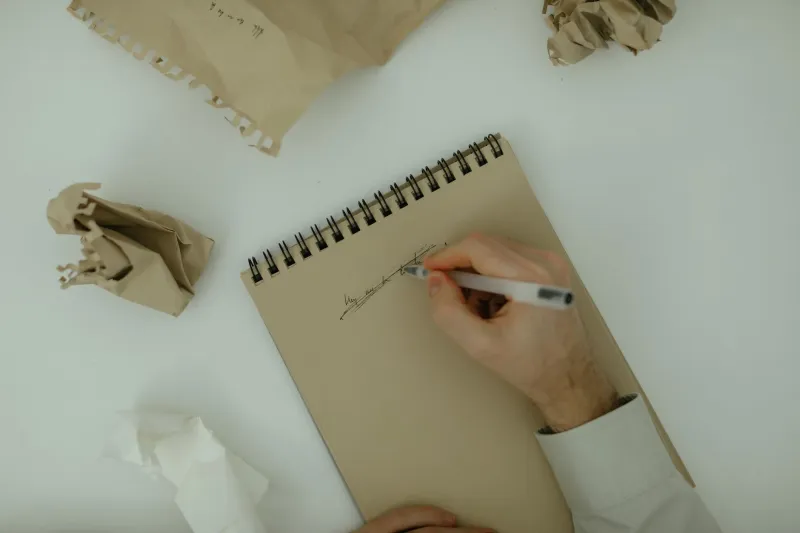
There is a version of my portfolio that doesn't exist. It contains twelve projects — a brand narrative for a fitness startup that folded before launch, a documentary treatment that went nowhere, a children's book that a publisher called 'charming but unmarketable.' That invisible portfolio is, in many ways, the most honest one I own.
When recruiters ask about my work, they see the polished outcomes: campaigns delivered, content published, clients satisfied. What they don't see is the graveyard of ideas that got me there. I've come to believe that graveyard deserves its own accounting.
The Rejections I Can Still Quote
Some rejections fade. Others lodge themselves in memory like song lyrics. There was the agency creative director who looked at a pitch I'd spent three weeks on and said, 'It's competent. It's just not memorable.' At the time, it stung like an eviction notice. Now I understand it was the most useful sentence anyone has ever said to me about my work.
Competence is the floor, not the ceiling. That single note changed how I approach every brief — I stopped asking 'is this good enough?' and started asking 'would anyone remember this on Tuesday?'
What Twelve Failures Actually Taught Me
1. Rejection is data, not verdict
Of the twelve rejected concepts, roughly half failed for reasons that had nothing to do with quality. Budgets shifted. Priorities changed. A decision-maker left the company. Learning to separate 'this work needs improvement' from 'the circumstances changed' preserved my confidence when I needed it most.
2. The second version is almost always better
Every idea I eventually sold began as something that was turned down. The treatment that got passed over came back as a tighter, sharper pitch. Rejection forced revision, and revision forced clarity. I now build a 'version two' into my timeline by default.
3. Keep the bones
I keep every rejected deck in a folder I call, without irony, 'The Morgue.' It sounds morbid, but it's the most valuable archive I own. Half of my strongest recent work was resurrected, Frankenstein-style, from concepts that died years earlier.
4. Tell the story of the miss, not just the win
When I started mentioning failed pitches in interviews and client conversations, something unexpected happened: people trusted me more. A candidate who can articulate what went wrong — and what they did about it — reads as someone who can be relied on when a live project hits turbulence.
5. Resilience is a practice, not a personality trait
I used to think some people were simply thick-skinned. They aren't. They've just built routines around disappointment: the 24-hour rule, the debrief note, the coffee with a peer who talks you off the ledge. Resilience is infrastructure.
For the Recruiters Reading This
If you're evaluating a creative professional, ask them about their failures — not as a gotcha, but as a diagnostic. The answer tells you how they metabolize feedback, whether they iterate, and whether they can be trusted with high-stakes work. My twelve rejections taught me more about client management, scope, and timing than any success ever did.
A Small Proposal
If you're a creative early in your career, start your own Morgue folder today. Write one paragraph about each rejection: what happened, what you learned, what you'd do differently. In five years, that folder will be the most persuasive document in your professional life.
The work that never saw the light of day still did its job. It made the work that did — better.