The Habits Audit: What Held Up When the Deadlines Came for Me

There's a particular kind of fatigue that comes from a year with too much good news. Every freelance writer dreams of being overbooked — right up until they are. Last year, I said yes to more client work than I'd ever managed simultaneously: two retainer contracts, a website overhaul, and a steady stream of one-off projects stacked on top.
Somewhere around October, I realized my carefully constructed creative routines were being field-tested in real time. Some held. Some collapsed spectacularly. Consider this the after-action report.
The Five That Survived
1. The 20-minute morning page
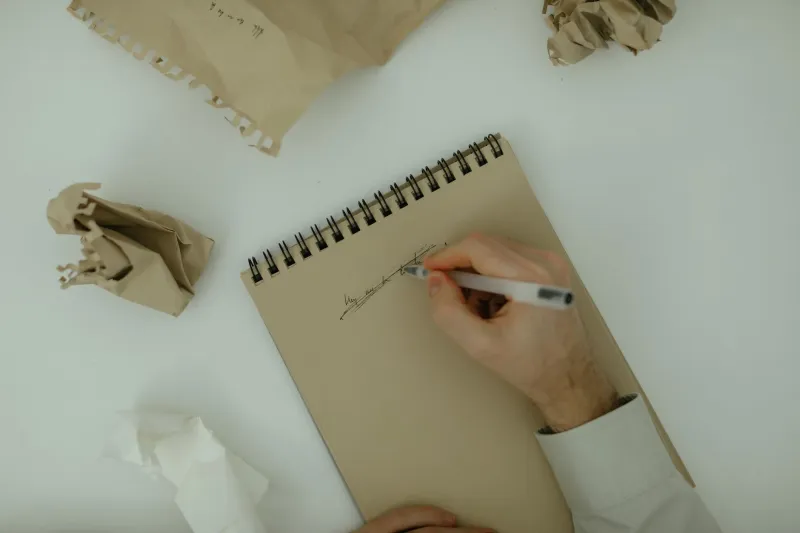
My grand ambition of writing two hours before work evaporated by February. What survived was a scaled-down version: twenty minutes of longhand freewriting with my coffee, no phone in the room. It wasn't glamorous, but it kept my sentences from calcifying into corporate speak. On my worst days, it was the only writing that belonged entirely to me.
2. The Friday afternoon audit
Every Friday at 3 p.m., fifteen minutes with a spreadsheet: what shipped, what stalled, what next week looks like. This habit sounds bureaucratic, but it was the single best defense against the freelance trap of mistaking busyness for progress.
3. Reading outside the brief
When deadlines mount, reading is the first thing sacrificed — and the most expensive mistake. I protected thirty minutes of fiction before bed, mostly because a client's brand voice started bleeding into my personal essays and I needed an antidote. Toni Morrison, it turns out, is excellent insurance against marketing copy voice.
4. The 'ugly first draft' contract with myself
I formalized a rule: no editing before 500 words exist. Perfectionism is a luxury of the under-scheduled. Under real pressure, the ugly draft isn't a technique — it's a survival mechanism.
5. Walking without headphones
Thirty minutes, no podcast, no playlist. Every structural problem I solved last year was solved on a walk around my neighborhood, not at the keyboard. The habit costs nothing and pays like a consultant.
The Three That Didn't
1. Daily blogging
The ambition was a personal essay every week. Reality delivered one per quarter. Rather than feel guilty, I retired the streak and replaced it with a running ideas document — which, honestly, fed my client work better anyway.
2. Rigid time-blocking
Color-coded calendar blocks looked beautiful in January and lasted about six weeks. Client calls don't respect your 'creative deep work' block. What replaced it: a single protected three-hour window each morning, movable within the day, immovable within it.
3. Social media 'consistency'
The advice says post daily to stay visible. During my busiest year, this habit produced resentment, not visibility. I cut it entirely for four months and lost nothing measurable. Now I post when I have something worth saying — which is a habit, technically, just not the one the gurus sell.
The Real Lesson
The habits that survived shared one trait: they were small enough to survive a bad week. The ones that died required ideal conditions, and ideal conditions are rare in freelance life.
If you're building routines to protect your craft, don't design them for your best week. Design them for your worst. The twenty-minute page beats the two-hour ritual not because it's better writing practice, but because it will still be there in November.
Your craft doesn't need your perfect schedule. It needs your Tuesday, even when Tuesday is a mess.