Speaking to the Chairs: Why I Recorded a Full Portfolio Walkthrough With Nobody Watching
Photo: Ignaz Wiradi, CC BY-SA 3.0 no, via Wikimedia Commons
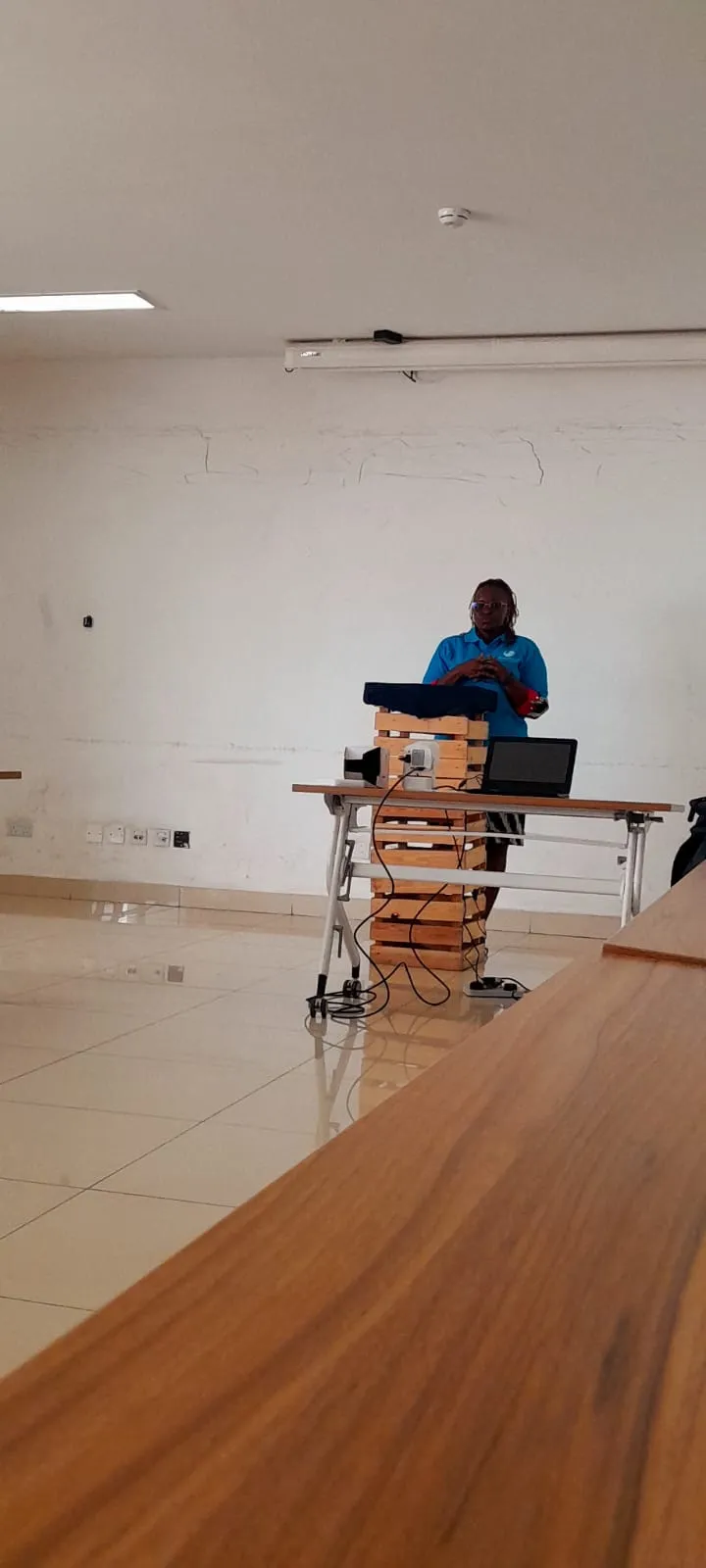
There is a particular kind of absurdity in dressing business-casual for an empty home office. I know because I did it on a Tuesday in March, when I propped my phone against a stack of books, opened my laptop to my portfolio's homepage, and gave a thirty-minute presentation on my own work to nobody at all.
No client on the calendar. No recruiter waiting. No deadline pushing me toward it. Just me, a camera, and the creeping suspicion that talking out loud about my projects would be harder than writing about them ever was.
The Origin of a Strange Idea
The impulse came from a small humiliation. In a final-round interview last fall, an interviewer asked me to "walk us through the project you're proudest of" — and I heard myself give a rambling, chronological tour that spent four minutes on setup and thirty seconds on the decision that actually mattered. I knew the work. I clearly didn't know how to perform the work.
Writers rehearse readings. Founders rehearse pitches. Somewhere along the way, I had decided that a portfolio — a written object — exempted me from the same discipline. It didn't. The walkthrough is a genre, and I had never practiced it.
So I borrowed a trick from my public-speaking days: record the practice run, watch it, wince, and revise. The only difference was that my rehearsal had no event attached to it. The empty room wasn't a limitation. It was the point.
What the Camera Caught That I Couldn't
The first recording was rough in ways that surprised me. I said "basically" eleven times. I introduced a project, got distracted by a design detail, and never circled back to the outcome. Worst of all, I noticed I kept narrating process — the meetings, the revisions, the long nights — when the person I was hypothetically presenting to would have wanted results.
Watching yourself present to no one is a strange mirror. There's no polite nodding to reassure you, no body language telling you to wrap it up. The recording just captures what's actually there. And what was actually there, in my case, was a habit of burying my strongest contributions under a landslide of context.
By the fourth take, something shifted. Without an audience to manage, I stopped performing and started explaining. I cut the throat-clearing. I led with the problem, stated my decision in one sentence, and let the visual do the rest. The version of me on that final recording was more direct than the version I'd been emailing for years.
The Empty Room as a Safe Space
I want to be clear about why the absence of stakes mattered. Presenting to a real audience — even a friendly one — triggers a kind of social accounting. You're tracking reactions, adjusting pace, editing yourself in real time. All of that cognitive load comes directly out of your clarity.
An empty room removes the accounting entirely. Nobody to impress, nobody to lose. That freedom let me experiment with framing I'd never risk live: a bolder claim about a project's impact, a more honest admission of what I'd gotten wrong on the first attempt. Some of those experiments failed on camera and stayed failed. Two of them became the strongest things I now say about my work.
There's also a practical, unglamorous benefit: repetition builds fluency. By the fifth take, I could describe my favorite case study in ninety seconds without notes, without filler, without apology. That muscle didn't evaporate when the recording stopped. It showed up in the next interview, the next intro call, the next time someone at a conference in Chicago asked me, "So what do you actually do?"
Turning a Private Rehearsal Into Public Material
I never published the video. That was never the plan, and I'd argue it shouldn't be yours either — at least not initially. The raw recording is a diagnostic, not a deliverable. But it turned out to be a remarkably generous one.
From thirty minutes of footage, I harvested:
- A tightened two-minute verbal pitch, now standard equipment for intro calls.
- Three rewritten case study openings, each leading with the decision rather than the backstory.
- One honest paragraph about a project that went sideways, which I'd been avoiding in writing for two years and which has since become one of the most-cited sections of my portfolio.
- A list of every filler phrase I lean on when I'm nervous, which I now catch mid-sentence instead of discovering them in playback.
The last one hurt the most and helped the most. You cannot fix a verbal tic you haven't heard yourself make forty times.
An Assignment for Anyone Standing at the Same Crossroads
If your portfolio is written, polished, and quietly failing to translate in conversation, consider this the nudge. You don't need a stage, an audience, or a reason. You need a camera, twenty minutes, and the willingness to watch yourself the way a stranger would.
Pick the project you're proudest of. Present it out loud as if the room were full. Then watch the recording — not with cringe, though there will be cringe, but with a note-taking hand. Ask the only question that matters: if I were hiring me, what would I want more of?
The empty room isn't a sad place. It's a rehearsal space. And the work you do for no one there tends to show up, unbidden, in front of everyone later.