Building the Shelf Before the Books: The Portfolio I Made for a Job That Didn't Exist
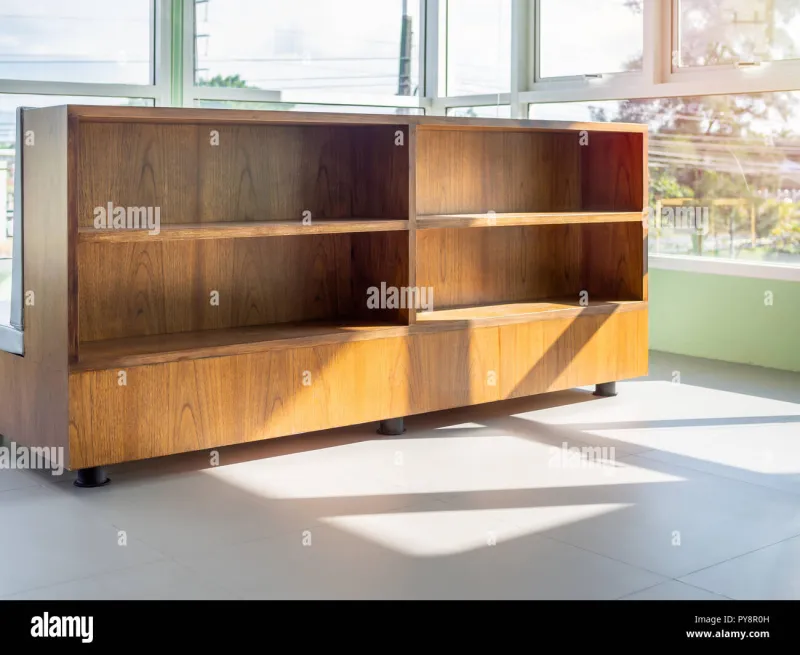
Photo: empty wooden bookshelf by window minimalist, via c8.alamy.com
In February of what I now think of as the Year of the Spreadsheet, I sat down and wrote out the job description of the position I wanted next. Not a job I had seen posted. Not a title I had watched float past on LinkedIn. I wrote it from scratch — responsibilities, required skills, the kind of portfolio the ideal candidate would supposedly bring to the interview.
Then I looked at my own website and realized the person it described would not have hired me.
The Exercise Nobody Assigns
Most career advice assumes the job comes first. You find the listing, you tailor the materials, you apply, you wait. It is a reactive posture, and after enough cycles of it, you start to mistake the market's current inventory for the full range of what is possible. The listings tell you what companies think they need. They rarely tell you what you could make yourself indispensable for.
So I inverted the sequence. I drafted the posting for a role I suspected would exist eventually — a hybrid position blending editorial strategy with design thinking, the kind of title that has since started appearing on job boards with alarming frequency. I wrote it the way a hiring manager would, ungenerously and specifically. Then I audited my portfolio against it.
The gap was instructive. I had plenty of proof that I could execute. I had almost nothing that demonstrated judgment at the level the imaginary role required. Every case study answered the question could she do the work? and none of them answered does she know which work is worth doing?
Redecorating for a Guest Who Hasn't Arrived
What followed was four months of rebuilding, most of it unbillable. I wrote three case studies about projects that had gone sideways and what my decisions had cost. I added a section on process that showed my reasoning, not just my outcomes. I retired two pieces of work I was proud of because they belonged to the career I had already had.
There is an uncomfortable word for what this felt like: pretending. I was building a portfolio for a professional who did not yet exist, arranging the shelf before the books were written. A friend, reviewing the draft site, asked the obvious question — isn't this a little ahead of yourself?
Maybe. But here is what I noticed while living inside the aspirational version of my own website: the work started bending toward it. When a client came to me with a fuzzy brief, I found myself solving it the way the imaginary candidate would have. The portfolio was not a lie waiting to be exposed. It was a specification.
What Came Back
The first inquiry that arrived through the new site was from a creative director who said, almost verbatim, that my case studies read like they were written by someone who understood both the writing and the design side of the problem. She was not hiring for the role I had invented. She was hiring for a project that turned out to be a close cousin of it.
Then came a referral, then a contract that required me to lead rather than execute, then — eighteen months after I wrote that fictional job description — a conversation with a company whose actual posted role overlapped my invented one by perhaps eighty percent. I did not apply to it through the front door. By then, they had already found me.
I want to be careful not to oversell this as manifestation. The website did not summon anything; it changed what I was practicing, and the practice changed what I was offering, and the offer changed who reached out. The portfolio was the instrument, not the magic.
The Gap Is the Point
If there is a general principle buried in this, it is that the distance between the work you have and the work you want is not something to hide. It is something to design against. Most portfolios are museums of the past. The useful ones are also, quietly, blueprints.
I still keep that fictional job description in a folder, updated once a year, because the role I want keeps moving as I do. Some years the gap widens. Some years I catch up. Either way, the shelf is already built — and every so often, I find a book on it that I do not remember writing.