Pricing Without Flinching: Notes From Ten Years of Apologizing With Numbers
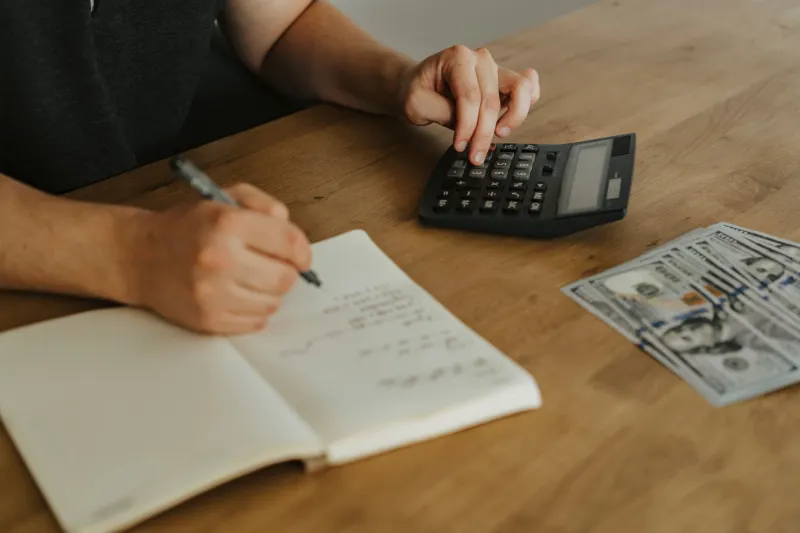
The first invoice I ever sent was for $350. I know the number precisely because I apologized for it in the email — something like "let me know if this works, happy to be flexible." I was not happy to be flexible. I needed the money. But I had priced the project by guessing what wouldn't scare the client off, then discounted my guess by twenty percent for safety, and the apology in the subject line was the final insurance policy against being told no.
The client accepted in eleven minutes. I spent the next week convinced I'd overcharged.
The Anatomy of a Panic Quote
Nobody teaches creatives how to price, so we improvise, and our improvisations are mostly fear wearing a costume. Mine came in three recurring varieties. There was the lowball, deployed when I wanted a project badly and assumed desire was a negotiating weakness to hide. There was the range with a trapdoor — "somewhere between $2,000 and $2,500" — where the trapdoor was always that I'd land at the bottom no matter what the scope became. And there was the freebie disguised as generosity, the "first one's on me" that taught clients exactly what my work was worth, which was nothing.
Each of these had the same root: I was pricing to avoid a conversation, not to run a business.
Building a Rate Card With Actual Reasons Attached
The turning point was unglamorous. A mentor — a graphic designer in Chicago who had survived twenty years of freelancing — looked at my rates and asked me to explain what each number covered. I couldn't. I'd never attached anything to them but vibes.
So we rebuilt it from arithmetic. My rate card now has three tiers, and every number traces back to a calculation:
- The floor. My annual expenses, taxes set aside at roughly thirty percent, the two months a year of dead pipeline I've learned to expect, divided by billable hours. A billable hour is not a workday; it's maybe four hours of it. Until my hourly rate cleared that floor, every project was subsidized by savings I pretended weren't shrinking.
- The scope multiplier. Rush timelines cost thirty percent more, stated plainly, because urgency is a real cost and pretending otherwise taxes my evenings. Revisions are capped at two rounds; round three opens a new line item. Not because I'm rigid — because unbounded revisions are how a $2,000 project becomes a $2,000 project that takes four months.
- The value line. For work where I can point to outcomes — copy that converts, a strategy engagement with measurable stakes — the price references the value delivered, not just my hours. This tier took the longest to say out loud and is now the one I quote most often.
Talking About Money Without the Cringe
The rate card solved the math; the conversation was a separate skill. What worked for me was removing all the softeners. I stopped saying "I was thinking maybe around." I stopped framing quotes as questions. A quote delivered as "Does that work for you?" invites a negotiation you've already signaled you're willing to lose.
Instead: state the number, state what it includes, and then stop talking. The silence after a price is the hardest discipline in freelancing. It is also the moment the client learns whether the number is real. If they push back — and sometimes they legitimately should — I now have somewhere to negotiate from: scope, timeline, deliverables. Never the rate itself, because a discounted rate tells the client the first number was fiction.
One more thing that took me years to learn: collaborators deserve the same directness as clients. When I subcontract or partner, I name my split in the first conversation, in writing, before any work starts. Every friendship I've watched dissolve over money dissolved because nobody wanted to be awkward early. Be awkward early. It's cheaper.
What Happened When the Rates Stopped Apologizing
I'll be honest about the fear first: when I raised my rates properly for the first time, I expected the pipeline to dry up. It didn't. Some clients left — the ones I now recognize were paying for my insecurity as much as my work. The clients who stayed were, without exception, easier to work with. They briefed better, respected the revision caps, and paid on time, because people who pay real rates tend to treat the work as real.
And the work itself improved, which surprised me most. Underpriced projects get squeezed into the margins of overbooked schedules — that's the only way the math works. Priced honestly, a project gets the hours it deserves, and the client gets the work that deserves the price. The whole system finally closes.
Ten years, seven rate increases, and one very humbling spreadsheet later, here is the whole lesson: a number delivered with a flinch isn't a price, it's a plea. Say the number. Attach a reason. Let the silence do its work.