Eleven Words in the Wrong Window: Notes on the Worst Email of My Career
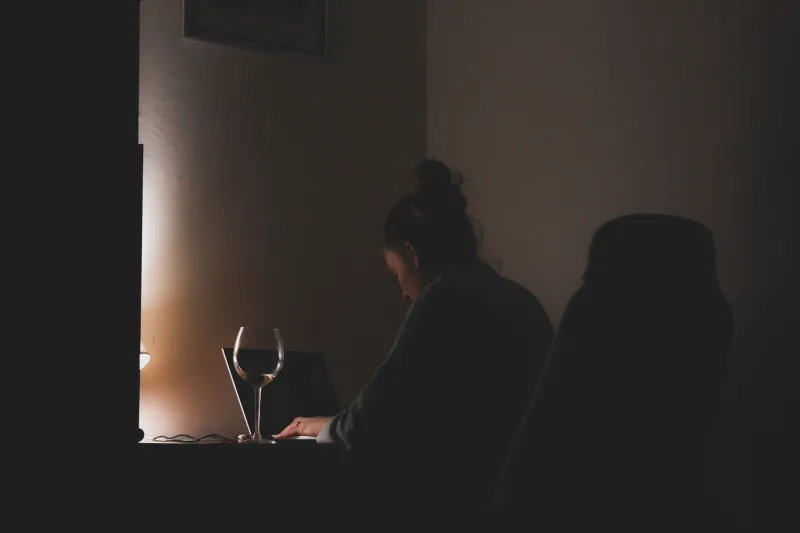
There is a particular quality to the silence that follows a catastrophic email. It is not dramatic. Nobody screams. The office does not gasp. There is only the small, obscene pop of the message leaving your outbox, followed by the sound of your own pulse in your ears and the fluorescent hum of a shared workspace in Chicago that suddenly feels very far from anywhere.
In March of 2019, I sent eleven words to the wrong person. They were not eleven kind words. They were a quick, careless aside about a client — written to a fellow freelancer, meant as a private exhale — and I sent them to the client instead. Reply-all. Wrong window. Whatever euphemism you prefer. The fact remains: she read, in her own inbox, exactly what I would never have said to her face.
What follows is not a story about how I fixed it in a day. I did not fix it in a day. I am writing about it six years later because the repair took years, and because I have come to believe that the story of what happens after a professional catastrophe is one of the most useful things a creative can hear.
The First Ninety Minutes
My instinct was to disappear. I drafted a resignation email. I composed, in my head, an entire alternate career — something in hospitality, maybe, where nobody could read my outbox. This is the fantasy the panic sells you: that the mistake is permanent and the only exit is total.
Instead, a mentor of mine — a creative director in Portland who has weathered worse — talked me down with a sentence I now repeat to almost everyone I work with: "You cannot unsend it, but you can out-behave it."
So I called her. Not an email, not a text. A phone call, within the hour, in which I said three things: I was sorry, there was no context that made it acceptable, and I understood if she wanted to end the engagement. I did not explain. I did not qualify. Explanation, I have learned, is often just apology wearing a nicer coat.
She was quiet for a long time. Then she said, "I appreciate that you called," and hung up. I spent the rest of the day certain I had lost the client. I had not lost the client. But I had lost something else, which took longer to rebuild.
The Long Arithmetic of Trust
Here is what nobody tells you about reputational damage: the headline passes quickly, but the arithmetic takes years. For the next two years, every email I sent this client was read — by both of us — through the lens of those eleven words. I was more careful. She was more reserved. The work continued, and it was good work, but there was a tax on every exchange.
And yet. In 2021, she referred me to the largest client I had ever had. When I asked her about it, she said something I think about weekly: "I watched how you handled the worst moment. That told me more than the portfolio did."
I want to be careful not to turn this into a redemption parable, because redemption parables imply the mistake was secretly a gift. It was not. It cost me sleep, and it cost her something too — the assumption of goodwill, which is the real currency of freelance work. But it taught me that trust is not a vase that shatters. It is more like a credit score: damaged by a bad incident, rebuilt through boring, repeated, verifiable behavior over time.
What the Repair Actually Looked Like
For anyone standing in the wreckage of their own reply-all, here is the unglamorous inventory of what helped:
Speed over polish. The call within the hour mattered more than any perfectly worded apology could have, sent the next morning.
No context clause. I did not say I was tired, or stressed, or that the client before her had been difficult. Every excuse reopens the wound it claims to dress.
Changed behavior, made visible. I rebuilt my email habits — the two-minute rule, the empty recipient field, the draft folder as a mandatory waiting room. She saw the change. That was the point.
Letting time do its unassisted work. There was no grand gesture that fixed things. There were eighteen months of showing up, delivering on time, and never mentioning it again unless she did.
Why I'm Telling You This
I am telling this story because I meet so many freelancers — especially early in their careers — who believe a single visible failure is terminal. It is not. The creative economy of the United States runs on relationships, and relationships, unlike spreadsheets, have a remarkable tolerance for being bruised and mended.
The mistake is not the ending. The mistake is the opening paragraph of a much longer story, and you are still the one holding the pen. Write the next sentence carefully, then the one after that, and one day — six years on, in my case — you will find that the worst email of your career has become the story you tell other people when they're sitting in their own fluorescent silence, staring at an outbox, certain it's over.
It isn't over. Send the call. Make the repair. Do the boring work of being trustworthy again.